Calvin Quallis, Founder, and CEO of Scotch Porter
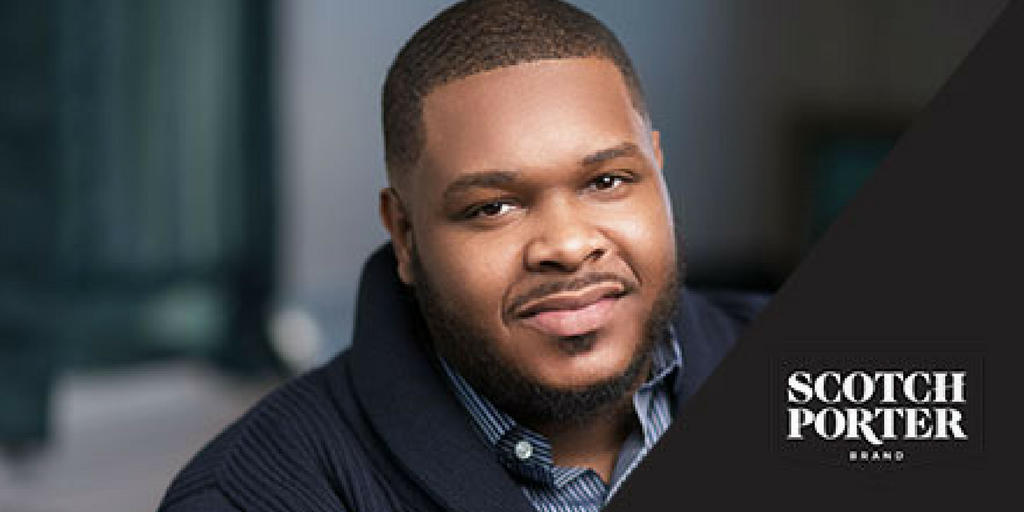
What started off as a hobby creating products in his home kitchen, has transformed into an international multimillion-dollar empire.
Before the launch of SCOTCH PORTER, Calvin was the co-owner of a barbershop in Northern, New Jersey. Throughout the years, Calvin noticed that many of his customers experienced similar problems when it came to the maintenance of their facial hair; he created a line of grooming products as the solution.
The products were sold in his barbershop and instantly gained popularity. These initial product offerings led to the inception and development of SCOTCH PORTER.
Calvin is not just an entrepreneur; he is a philanthropist and an avid member of the Big Brothers Big Sister. In 2015, he was named the “Big Brother of the Year” for the State of New Jersey by the organization. Calvin and SCOTCH PORTER have been featured in People, Essence, AskMen and Ebony Magazine.
There’s Money Out There… If You Know Where to Look!
July’s There’s Money Out There’s radio broadcast heard on WURD 900AM will spotlight a case study into the development and growth of Scotch Porter. What is Scotch Porter? Who is the Scotch Porter Man?
“Scotch Porter is more than just a brand; it’s a call to action. Scotch Porter is for the modern day man who wants to look his best at all times. Your first impression is your last impression, and while you rock your distressed denim, cashmere sweater and a leather bag or even your suit and tie, we’ve got you covered on the rest. From head to toe.” Quintessential Gentlemen
Who’s This Show For?
If you are a business owner, or if you have an idea for a business startup, this show is for you!
Often at WPFSI, we get questions like:
- Who is eligible to get a business loan from a bank or a finance company?
- What do you place as a priority when looking for business finance?
- How to avoid a biz idea being stolen when looking for financing?
- What are my chances of getting a loan?
- Do I have a degree in Accounting, Business, Economics or Finance?
- What are creative ways to get my start-up funded?
These questions and more will be discussed with our guest. And, we believe Calvin Quallis is uniquely suited to address these questions as his personal story of perseverance and diligence is relatable to many people in our audience.
There’s Money Out There is your chance to talk directly to business owners, and get your questions answered by someone who is in the trenches building a business every day.
If this is you, we encourage you to tune into There’s Money Out There, Saturday, July 15 at 1:00 PM on WURD 900 AM or WURD 96.1 FM.
Downloaded the APP It’s FREE!

Calvin Quallis, Founder, and CEO of Scotch Porter What started off as a hobby creating products in his home kitchen, has transformed into an international multimillion-dollar empire. Before the launch of SCOTCH PORTER, Calvin was the co-owner of a barbershop in Northern, New Jersey. Throughout the years, Calvin noticed that many of his customers experienced [...]
The post Scotch Porter Case Study appeared first on WPFSI.
]]>The post Scotch Porter Case Study appeared first on WPFSI.
How to become bold, confident and overcome obstacles! Delores Pressley Self-Improvement Home-Based Businesses – Visit the Home Business Mag EXPO As a former plus-size model, Delores Pressley knows all too well the pain and disappointment of rejection and judgments based solely on appearance, both professionally and personally. She has lived it time and time again. But, [...]
The post There’s Money Out There Guest Delores Pressley appeared first on WPFSI.
]]>Notice: ob_end_clean(): Failed to delete buffer. No buffer to delete in /home/wpfsi1/public_html/wp-content/plugins/wp-optin-boxes-pro/public/class.public.php on line 654
How to become bold, confident and overcome obstacles!
Delores Pressley Self-Improvement Home-Based Businesses – Visit the Home Business Mag EXPO
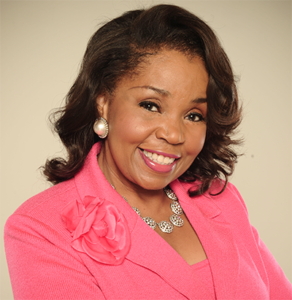 As a former plus-size model, Delores Pressley knows all too well the pain and disappointment of rejection and judgments based solely on appearance, both professionally and personally. She has lived it time and time again. But, rather than allowing the numerous barrier-inducing critics of my plus-size define who she was, how she would live her life, and what measure of success and happiness she could achieve, Delores instead chose to face that “cold winter season” head on, turning what others had deemed as challenges into the very assets that would help me realize tremendous success in all aspects of her life.
Do you suffer from low self-esteem? Have others made you feel bad because of the way you look or your body image? You will learn the answers to these questions as
Delores shares from her 5 Ways to Regain Confidence & Courageousness When the Going Gets Tough.
I’ve dedicated myself to helping others become bold, confident and courageous—no matter what “season” they themselves are in.
Not only did DeLores embrace her appearance and excel as a plus-sized model, she was emboldened enough to help others do the same by becoming President of Dimensions Plus Model Agency—a firm representing over 100 models, placing them with premier fashion retailers such as Nordstrom, Lane Bryant, Just My Size, Dillard’s, and Liz Claiborne.
And, she didn’t stop there as DeLores also became the founder of the Plus USA Women Beauty Pageant and Convention, providing an opportunity for hundreds of women to achieve the dreams she herself accomplished. She’s since established herself as a six-figure international speaker who has shared the platform with A-Listers the likes of OPRAH, Zig Ziglar, Les Brown, and Retired U.S. Supreme Court Justice Sandra Day O’Connor.
Your WPFSI WURD 900 AM team of Kim, Jim, and Calvin will be sharing business tips, money ideas and highlights from MED Week. So tune in Saturday, October 15th at 1:00 pm for There’s Money Out There featuring model, author, speaker and entrepreneur Delores Pressley.
The post There’s Money Out There Guest Delores Pressley appeared first on WPFSI.
]]>The post Banking Black and Community Development appeared first on WPFSI.
]]>Will Bank Black Movement Make Real Change in Black Communities?
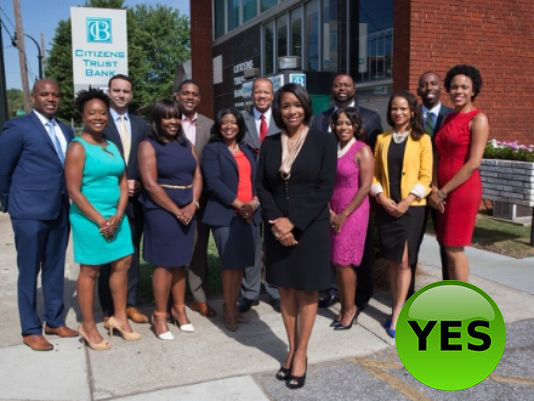
The movement to support black-owned banks picked up this summer after the rapper and community activist Killer Mike initiated the #bankblack challenge.
(This image shows Black-owned or majority-owned banks across the country. Source: Black Out Coalition)
Killer Mike was joined by other music industry activists, such as Jermaine Dupri and Usher, to encourage people throughout the country to open a savings account at black-owned banks and deposit $100.
In the first five days, 8,000 people had responded to Killer Mike’s call and opened accounts at Citizens Trust Bank in Atlanta. OneUnited bank experienced a similar increase in business.
By July, #Bankblack supporters deposited $3 million into new accounts. The #bankblack challenge is intended to complement the #BlackLivesMatter campaign as well as to demonstrate the power of African-American financial decisions.
Black-owned banks and financial services institutions are a vital source of community development and economic empowerment. The recent support of the black banking movement is a form of economic awareness and a shift towards local community building. It is also an economic protest in which action is taken with wallets to move money out of large corporate banks and into black-owned banks.
A large component of the development of predominantly African-American neighborhoods also emphasizes the strengthening of civil rights particularly in regards to the criminal justice system. The bank black movement promotes unification and self-help economics to cure social ills in the black community.
Justin Garrette Moore, an urban planner, and designer and the director of New York City’s Public Design Commission, in addition to others, has advocated in favor of supporting strategies of economic-based protests as a method to promote civil rights. He recently
He recently voiced that, “having more wealth and more exchange and accumulation of wealth and property in the black community could, I think, create a different context for a lot of these conversations about community policing or safety”.
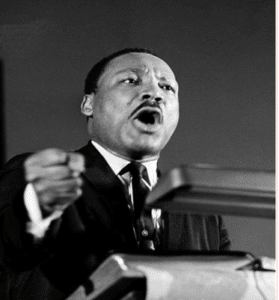
The rhetoric of the black community actively supporting black businesses echoes the Civil Rights Movement of the 50s and 60s. Martin Luther King Jr. and other prominent leaders encouraged black financial and economic empowerment.
In April 1968 Martin Luther King Jr. gave a speech in Memphis, on equality and economic empowerment stating, “We’ve got to strengthen black institutions. I call upon you to take your money out of the banks downtown and deposit your money in Tri-State Bank [a Memphis black-owned bank]. We want a “bank-in” movement in Memphis…
We want a “bank-in” movement in Memphis…
Now, these are some practical things that we can do. We begin the process of building a greater economic base. And at the same time, we are putting pressure where it really hurts. I ask you to follow through here.”

In continuing this conversation, There’s Money Out There’s (TMOT) Banking Black August radio show interviewed Michael Grant, President, and CEO of National Bankers Association, and Evelyn Smalls, President of United Bank Philadelphia, to discuss the #Banking Black community and how supporting these banks can spur economic development in African-American communities.
TMOT began noting the primary difference between corporate banks and black-owned banks. Banks primary function and means of largest revenue generation is through lending services. The amount of lending is based
The amount of lending is based on the number of deposits in their clients’ savings and checking accounts. The primary difference between the business practices of corporate banks and black-owned banks is that black-owned banks and financial institutions engage in more local and community-based activity. As such, the money stays in the communities of their clients.
Community advocacy is a large component of black-owned or majority-owned financial institutions’ mission. These institutions serve those who fail to meet the requirements of corporate banks. Black banking supports building community capacity from the ground up by granting loans or consulting services to small businesses, procuring mortgages for low-income homebuyers, or helping underserved individuals set up an account. In some instances, the latter does occur within corporate banks however local development and local customers are a top priority for black-owned financial institutions.
This mission of Black-owned banks is particularly important in that they provide timely services and support when national policy initiatives, as well as national institutions, are slow to end current social problems in many African-American communities. This real-time support for community and individual financial empowerment is at the heart of the black banking moment.
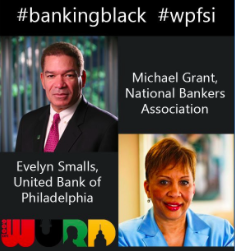
Michael Grant, President, and CEO of National Bankers Association notes that when local banks lend to businesses in the community results are instantly produced. Returns are not solely in dollars but rather create a real impact on jobs, eradication of homelessness and poverty. Black-owned banks balance regional and local economies through spreading the wealth to the communities that they serve.
Evelyn Smalls, President of United Bank Philadelphia, urges for the continued support of black-own banks. She notes that Black-owned banks have more of a relationship with the community and it is through these continued banking relationships that spur the success of both clients as well as black-owned banks. One of the most important banking relationships that allow Black-owned banks to continuously invest in the community is achieved through continued deposits. This increases the services that black-owned banks can offer.
While support for black-owned banking institutions is long overdue, in order to positively influence these institutions members of their community should focus on building long-term relationships. Despite emerging as a finite trending hashtag on social media, #bankingblack has the potential to be one of the most positive political, economic, and social influence. Because of this, the #bankingblack movement should continue to thrive in our conscience.
What You Can Do to Support Black-Owned Banks
- Go to your local bank.
- Establish a financial relationship such as establishing a mortgage or loan or requesting financial management assistance.
- Set up an account and deposit regularly.
These are the beginning steps that allow money to continuously flow into the black community in order to change the economic paradigm of our communities.
The post Banking Black and Community Development appeared first on WPFSI.
]]>Why the Racial Wealth Gap Won't Go Away Wealth Inequality Wealth inequality can be described as the unequal distribution of assets within a population. The United States exhibits wider disparities of wealth between rich and poor than any other major developed nation. Definition provided by Inequality.org Defining Wealth Wealth is equated with “net worth,” [...]
The post Wealth Inequality: The Racial Wealth Gap appeared first on WPFSI.
]]>Notice: ob_end_clean(): Failed to delete buffer. No buffer to delete in /home/wpfsi1/public_html/wp-content/plugins/wp-optin-boxes-pro/public/class.public.php on line 654
Why the Racial Wealth Gap Won’t Go Away
Wealth Inequality
Wealth inequality can be described as the unequal distribution of assets within a population. The United States exhibits wider disparities of wealth between rich and poor than any other major developed nation. Definition provided by Inequality.org
Defining Wealth
Wealth is equated with “net worth,” the sum total of your assets minus liabilities. Assets can include everything from an owned personal residence and cash in savings accounts to investments in stocks and bonds, real estate, and retirement accounts. Liabilities, on the other hand, are what a household owes out: a car loan, credit card balance, student loan, mortgage, or any other bill yet to be paid.
In the United States, wealth inequality runs even more pronounced than income inequality.
The Racial Wealth Divide
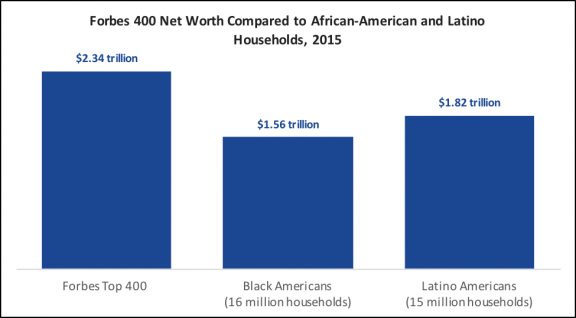
The billionaires who make up the Forbes 400 list of richest Americans now have as much wealth as all African-American households, plus one-third of America’s Latino population, combined. In other words, just 400 extremely wealthy individuals have as much wealth as 16 million African-American households and 5 million Latino households.
Read: Why the racial wealth gap won’t go away
The Roots of the Widening Racial Wealth Gap
According to a 2009 study by Brandeis University’s Institute on Assets and Social Policy home ownership is the single largest factor in driving racial wealth inequality.
The study followed 1,700 families for 25 years, starting in 1984. During that time, “the total wealth gap between white and African-American families nearly triples, increasing from $85,000 in 1984 to $236,500 in 2009.” (This is insane.) The contributing factors to this wealth gap were as follows:
Among households with positive wealth growth during the 25-year study period, the number of years of home ownership accounts for 27 percent of the difference in relative wealth growth between white and African-American families, the largest portion of the growing wealth gap. The second largest share of the increase, accounting for 20 percent, is average family income. Highly educated households correlate strongly with larger wealth portfolios, but similar college degrees produce more wealth for whites, contributing 5 percent of the proportional increase in the racial wealth gap. Inheritance and financial support from family combine for another 5 percent of the increasing gap. How much wealth a family started out with in 1984 also predicts a portion (3 percent) of family wealth 25 years later.
Black people tend to buy houses later in life; therefore, their houses do not increase in value as much. They also tend to live in black neighborhoods, where real estate values are lower since white people don’t want to buy there. Black people also inherit far less money, and they are not able to build wealth through marriage as easily as white people. This much, by itself, adds up to a self-perpetuating system in which whites steadily increase their own wealth, while black families mostly cannot.
Add in poorer education, and fewer employment opportunities, and institutional racism, and you have a very, very steep hole for black families collectively to climb out of. And it will take a very, very massive public investment to change it.
What Is the Solution To The Wealth Gap Problem?
Experts of Color Network (ECON), which includes over 200 of the nation’s leading Native American, Asian-American, African-American, Latino, and Native Hawaiian experts on housing, jobs, savings and investment to debt, credit, social insurance, and business development recommends that policymakers consider the following principles when developing policies, in order to create inclusive economic participation:
- Policies must be designed to change the structures of economic opportunity.
- Policies must help people build assets throughout their lifetime.
- Policies must help communities build and retain wealth.
- Policies must be both universal and targeted to America’s more vulnerable communities.
As with many “think tank” and academic solutions, most of these are rooted in “policy changes”. The inherent problem with this mode of thinking is that the poor and disenfranchised are left waiting for politicians to make changes in a system that is ultimately controlled by the wealthy.
The idea of policy change has been argued for the last 50 years.While the rhetoric has changed, the core argument has remained the same.
In addition to any governmental policy change, there must be a paradigm shift in the affected communities with regard to saving and spending habits. We need the think about solutions in a new way.
For a fresh perspective and actionable steps you can take to address the wealth gap you’re invited to join the conversation, There’s Money Out There on July 16th at 1:00 pm on WURD 900 AM.
Creative approaches to personal wealth will be discussed with guests Pamela Jolly and Reggie Kyle; financial experts who have crafted alternative solutions for African Americans to address the Wealth Gap problem. You will want to tune in for what promises to be a vibrant and revealing conversation with practical advice that you can implement right away.
To learn more about the TMOT show, click here.
The post Wealth Inequality: The Racial Wealth Gap appeared first on WPFSI.
]]>The Every Man Investor What is BMe & how are they building strong communities for Black men and boys? There's Money Out There if you're looking for an alternative method to fund your business idea or non-profit, it's known as Crowdfunding! This weeks' guest is Bridget Best who will discuss the crowdfunding phenomenon and how this innovative funding alternative can [...]
The post Crowdfunding with Kickstarter's Bridget Best appeared first on WPFSI.
]]>Notice: ob_end_clean(): Failed to delete buffer. No buffer to delete in /home/wpfsi1/public_html/wp-content/plugins/wp-optin-boxes-pro/public/class.public.php on line 654
What is BMe & how are they building strong communities for Black men and boys?
 There’s Money Out There if you’re looking for an alternative method to fund your business idea or non-profit, it’s known as Crowdfunding! This weeks’ guest is Bridget Best who will discuss the crowdfunding phenomenon and how this innovative funding alternative can help your business.
Bridget serves on the executive team of Kickstarter, a public benefit corporation, as Vice President of Operations. In that capacity, she manages strategic initiatives that strengthen and grow Kickstarter as the leading platform for funding creativity.

- Top 3 Tips for success on Kickstarter.
- How does this type of financing compare traditional loans, grants, investment funds, etc.?
- What kinds of campaigns are most successful?
- How does Kickstarter work at the community level support entrepreneurs and non-profit organizations?
- What if you want crowdfund, but are not very social?
What Exactly is Crowdfunding?
Crowdfunding is the practice of funding a project through the monetary contributions of a large number of people. It’s a form of alternative finance, which has emerged outside of the traditional financial system.
This financing model is based on three types of actors:
- The project initiator who proposes the idea and/or project to be funded;
- Individuals or groups who support the idea;
- and a moderating organization (the “platform”) that brings the parties together to launch the idea.
In 2013, crowdfunding raised over US$5.1 billion worldwide.
Never Heard of Kickstarter
According to Wikipedia, Kickstarter is an American public-benefit corporation based in Brooklyn, New York which has built a global crowdfunding platform focused on creativity. The company’s stated mission is to help bring creative projects to life. Kickstarter has reportedly received more than $1.9 billion in pledges from 9.4 million backers to fund 257,000 creative projects, such as films, music, stage shows, comics, journalism, video games, technology and food-related projects.
Kickstarter helps artists, musicians, filmmakers, designers, and other creators find the resources and support they need to make their ideas a reality.
This is a great opportunity to chat with expert Bridget Best and get your questions answered.
And… guests Jeffrey Jones, Community Manager of BME & Michael Gross, manager of WPFSI’s WesGold Fellows discuss their collaboration with Kickstarter and what led them to pursue this course of financing.
Be sure to join James Burnett, Calvin Tucker and Kimberly Reed on WURD 900 AM at 1:00 pm for “There’s MONEY Out There” on Saturday June 18th, 2016.
Missed the broadcast? No problem!
Click below to listen to the entire interview…

The post Crowdfunding with Kickstarter's Bridget Best appeared first on WPFSI.
]]>The post Leveraging Relationships In Business appeared first on WPFSI.
]]>Entrepreneur Case Study How To Leverage Relationships In Business
How important are building and leveraging relationships in business? According to StreetSmart Business Development, “Opportunities to create enduring client relationships present themselves on a daily basis in the form of “basic” communications. Things like emails, meetings, presentations, proposals and follow up. These basic initiatives can build credibility, trust, referrals, and revenue. It’s true whether your contacts are prospects or clients. Whether your company is a start-up or well established.”
Our guest on the May 2016 broadcast TMOT, Michael Brown, CEO at Environmental Construction Services, Inc., shared his practical & real-world knowledge of the power of leveraging business relationships.

Michael Brown
Michael Brown’s company, Environmental Construction Services, Inc. is one of the fastest growing HVAC companies based in Philadelphia. As CEO, he has been busy making sure it stays that way by providing superior solutions for clients, educating himself on new business practices, researching the best financing options for growth and much more.
Listen to the Michael Brown Podcast:
[sc_embed_player_template1 fileurl=”https://s3-us-west-2.amazonaws.com/wpfsi/TMOT+-+Michael+Brown+Case+Study.mp3″]
The post Leveraging Relationships In Business appeared first on WPFSI.
]]>