Small Businesses Should Expect Policy Changes Under Trump

The presidential election results have shocked many including small business owners!
Throughout his campaign, Donald Trump has made it vividly clear that it won’t be business as usual with him in the Oval Office. Many are unsure how a Trump administration will affect small businesses. His policy proposals include lowering taxes, increased infrastructure spending, dismantling some trade agreements and imposing tariffs on products made in the foreign plants of U.S. companies.
However, many take these as merely campaign talk designated to rack in the highest level of votes through sensationalism and increased television coverage. Furthermore, in our political system the president does not pass laws, Congress (which now has a Republican’s majority in both houses) does. As such, any immediate policy changes will be subject to the limitations of what Trump can effect through executive orders.
Part of Trump’s so-called “new deal,” which he revealed during one of his election stops, included new tax incentives for inner cities, new microloans for African Americans to start companies and hire workers, and a plan to reinvest money from suspended refugee programs in inner cities. Black Enterprises Wealth For Life

Republican presidential candidate Donald Trump holds a roundtable meeting with the Republican Leadership Initiative in his offices at Trump Tower in New York, Thursday, Aug. 25, 2016. Dr. Ben Carson is seated next to Trump at center. (AP Photo/Gerald Herbert)
Large and medium size businesses are not afraid of Trump’s banter. Ford’s CEO Mark Fields, said he hasn’t actually been listening to Trump, believing it is merely “presidential politics”.
Businesses around the world are not pessimistic about a Trump administration. The billionaire businessman’s victory took investors around the world by surprise and sent markets into a tailspin. Overnight, the Dow fell as much as 800 points, freezing trading in periods of extreme swings. However, businesses became confident enough after Mr. Trump’s speech calling for unity to close the next day at a record high in response to Trump’s acceptance speech encouraging unity within the country. The day of Trump’s victory closed with the Dow making up its opening losses and closed inches away from its record closing price.
Despite, large and medium size businesses responding positively to Trump’s victory, what does the billionaire’s presidency mean for small businesses owners.

The ability of the Trump administration to implement his policy changes can be highlighted from his team’s experience in assembling a transition team and working with the Obama administration.
Despite the Trump team posting their policies and governmental approach for the first 100 days of office, Trump’s first act as assembling a transition team to establish a new government has yet to solidify. Mr. Trump and his team’s ability to foster a seamless transition has been in disarray, marked by firings, infighting, and incompetent appointees. One week after Mr. Trump scored an upset victory that took him by surprise, his team was improvising the most basic traditions of assuming power. Two advisors are out, Mike Rogers, a former congressman who handled national security matters, and Matthew Freedman, who was in charge of coordinating Mr. Trumps calls to world leaders. The latter reshuffling comes as Mr. Trump removed Gov. Chris Christie of New Jersey who had been preparing with Obama administration officials for months to put the complex transition process into motion.

(Vice President-elect Mike Pence arrived at Trump Tower in Manhattan on Tuesday. Credit Sam Hodgson for The New York Times)
Still, the slow and uncertain start to what is normally a rapid and meticulously planned transfer of power could have profound implications for Mr. Trump’s nascent administration. It challenges the president-elect’s efforts to gain control of the federal bureaucracy and to begin building a staff fully briefed on what he will face in the Oval Office on Day 1.
The above insights of disorder and alternate motives in political appointments indicate that the billion business man and his team might not have the ability to implement his political agendas that brought him to the White House.
In response to the uncertainty of what a Trump administration will look like for small businesses, it is difficult to speculate as markets have responded well to the businessman who promised to dismantle the base of global markets and revoke trade agreements as well as increase tariffs. Instead of creating a risk management approach, entrepreneurs should instead focus on reviewing and solidifying their business fundamentals in preparation for whatever the wind might bring on January 20, 2017.
Business Management Fundamentals

(Scott Mlyn | CNBC)
Despite annual notions of new management ideas or leadership philosophies, often they are just window dressing on fundamental ideas that have been around for years. The below true business fundamentals that drive business success are unchanging. So implement these principles and your business success will be enhanced.
1) Finance and Accounting
Cash flow is what matters is a sustainable business. Know and improve upon your accounting and finance practices. Tracking the flow of money on a daily and monthly basis is vital. In addition, finance knowledge is essential to allocate the needed funds for growth. Establishing a routine Case Flow Analysis identifies and solves balance of payment issues before they occur.
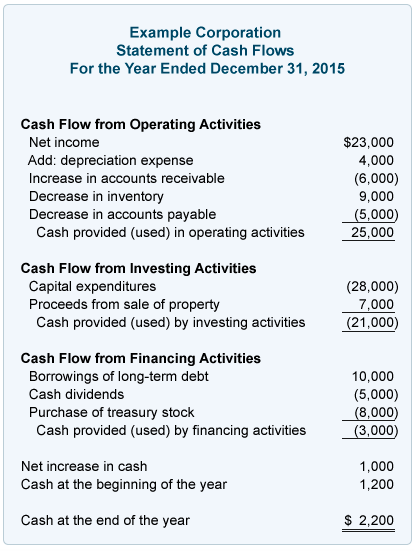
(Source: accountingcoach.com)
Cash flow analysis statements are generally separated into three parts:
- Operating activities: This section evaluates net income and losses of a business by assessing sales and business expenses, as well as other inflows and outflows of cash transactions to determine a net figure.
- Investment activities: This section reports inflows and outflows from purchases and sales of long-term business investments such as property, assets, equipment, and securities. For example – if your bakery business purchases an additional piece of kitchen equipment, this would be considered an investment and accounted for as an outflow of cash. If your business then sold equipment that was no longer needed, this would be considered an inflow of cash.
- Financing activities: This section accounts for the cash flow trend of all money that is related to financing your business. For example: if you received a loan for your small business, the loan itself would be considered an inflow of cash. Loan payments would be considered an outflow of cash, and both would be recorded in this part of the cash flow analysis statement.
2) Market Research
Unfortunately, small business owners overlook the importance of market analysis. It is essential for a business to situate itself in a good industry or a market niche with growth and healthy profit opportunities. In a low growth market, even a company with the best talents will fail. In building a market analysis evaluate and gather your industry description and outlook, information about your target market, distinguishing characteristics of your potential customers, the size of the primary target market, and a competitive analysis.
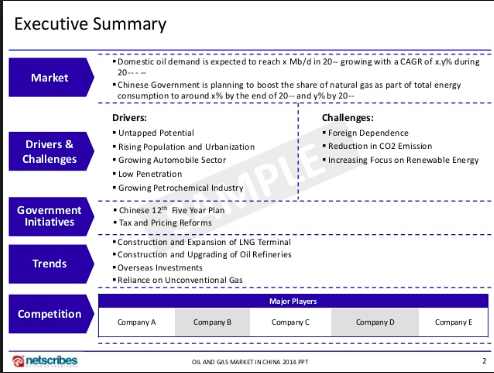
(Sample of a market research report on oil demand in China)
Here are four sources of free data for market analysis research:
- U.S. Census Bureau, American Fact Finder; http://factfinder.census.gov/faces/nav/jsf/pages/index.xhtml
- The U.S. Census Bureau’s Business Help Site and their Data Access tools; https://bhs.econ.census.gov/bhs/
- Business Data and Statistics from SBA Office of Advocacy https://www.sba.gov/advocacy
- Bureau of Economic Analysis http://bea.gov
3) Marketing Activity
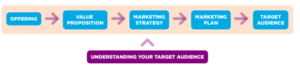
The key to a strong marketing approach is the ability to see your product/ service in the lens of a customer. Research on the distinguishing characteristics of your customers and your competitor’s practices should grant you insights into how best to communicate your product/service’s value. Customers are diverse and receive information differently regardless of how niche your business is.
In addition, marketing activity should correspond to the diversity of your customers. Marketing towards long-term customers should be different from approaches to growth your customer base. For example, loyalty programs or the ability to shop first for a new line or service communicate to repeat customers their value and the company’s appreciation for their service. Marketing activities designed to increase customers should focus on their creatively and originally to communicate their product/service’s value in a saturated and competitive market.
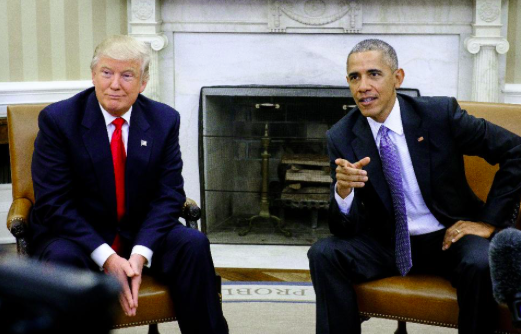
(Photographer: Pete Marovich/Bloomberg)
Creating a solid business foundation built upon the above business fundamentals of finance and accounting, market activity, and market research will help small businesses recover and adjust to uncertain economic effects once the Trump administration assumes control on January 20, 2017.
Small Businesses Should Expect Policy Changes Under Trump The presidential election results have shocked many including small business owners! Throughout his campaign, Donald Trump has made it vividly clear that it won’t be business as usual with him in the Oval Office. Many are unsure how a Trump administration will affect small businesses. His policy [...]
The post How Should Small Businesses Respond to a Trump Presidency? appeared first on WPFSI.
]]>The post How Should Small Businesses Respond to a Trump Presidency? appeared first on WPFSI.
Why the Racial Wealth Gap Won't Go Away Wealth Inequality Wealth inequality can be described as the unequal distribution of assets within a population. The United States exhibits wider disparities of wealth between rich and poor than any other major developed nation. Definition provided by Inequality.org Defining Wealth Wealth is equated with “net worth,” [...]
The post Wealth Inequality: The Racial Wealth Gap appeared first on WPFSI.
]]>Notice: ob_end_clean(): Failed to delete buffer. No buffer to delete in /home/wpfsi1/public_html/wp-content/plugins/wp-optin-boxes-pro/public/class.public.php on line 654
Why the Racial Wealth Gap Won’t Go Away
Wealth Inequality
Wealth inequality can be described as the unequal distribution of assets within a population. The United States exhibits wider disparities of wealth between rich and poor than any other major developed nation. Definition provided by Inequality.org
Defining Wealth
Wealth is equated with “net worth,” the sum total of your assets minus liabilities. Assets can include everything from an owned personal residence and cash in savings accounts to investments in stocks and bonds, real estate, and retirement accounts. Liabilities, on the other hand, are what a household owes out: a car loan, credit card balance, student loan, mortgage, or any other bill yet to be paid.
In the United States, wealth inequality runs even more pronounced than income inequality.
The Racial Wealth Divide

The billionaires who make up the Forbes 400 list of richest Americans now have as much wealth as all African-American households, plus one-third of America’s Latino population, combined. In other words, just 400 extremely wealthy individuals have as much wealth as 16 million African-American households and 5 million Latino households.
Read: Why the racial wealth gap won’t go away
The Roots of the Widening Racial Wealth Gap
According to a 2009 study by Brandeis University’s Institute on Assets and Social Policy home ownership is the single largest factor in driving racial wealth inequality.
The study followed 1,700 families for 25 years, starting in 1984. During that time, “the total wealth gap between white and African-American families nearly triples, increasing from $85,000 in 1984 to $236,500 in 2009.” (This is insane.) The contributing factors to this wealth gap were as follows:
Among households with positive wealth growth during the 25-year study period, the number of years of home ownership accounts for 27 percent of the difference in relative wealth growth between white and African-American families, the largest portion of the growing wealth gap. The second largest share of the increase, accounting for 20 percent, is average family income. Highly educated households correlate strongly with larger wealth portfolios, but similar college degrees produce more wealth for whites, contributing 5 percent of the proportional increase in the racial wealth gap. Inheritance and financial support from family combine for another 5 percent of the increasing gap. How much wealth a family started out with in 1984 also predicts a portion (3 percent) of family wealth 25 years later.
Black people tend to buy houses later in life; therefore, their houses do not increase in value as much. They also tend to live in black neighborhoods, where real estate values are lower since white people don’t want to buy there. Black people also inherit far less money, and they are not able to build wealth through marriage as easily as white people. This much, by itself, adds up to a self-perpetuating system in which whites steadily increase their own wealth, while black families mostly cannot.
Add in poorer education, and fewer employment opportunities, and institutional racism, and you have a very, very steep hole for black families collectively to climb out of. And it will take a very, very massive public investment to change it.
What Is the Solution To The Wealth Gap Problem?
Experts of Color Network (ECON), which includes over 200 of the nation’s leading Native American, Asian-American, African-American, Latino, and Native Hawaiian experts on housing, jobs, savings and investment to debt, credit, social insurance, and business development recommends that policymakers consider the following principles when developing policies, in order to create inclusive economic participation:
- Policies must be designed to change the structures of economic opportunity.
- Policies must help people build assets throughout their lifetime.
- Policies must help communities build and retain wealth.
- Policies must be both universal and targeted to America’s more vulnerable communities.
As with many “think tank” and academic solutions, most of these are rooted in “policy changes”. The inherent problem with this mode of thinking is that the poor and disenfranchised are left waiting for politicians to make changes in a system that is ultimately controlled by the wealthy.
The idea of policy change has been argued for the last 50 years.While the rhetoric has changed, the core argument has remained the same.
In addition to any governmental policy change, there must be a paradigm shift in the affected communities with regard to saving and spending habits. We need the think about solutions in a new way.
For a fresh perspective and actionable steps you can take to address the wealth gap you’re invited to join the conversation, There’s Money Out There on July 16th at 1:00 pm on WURD 900 AM.
Creative approaches to personal wealth will be discussed with guests Pamela Jolly and Reggie Kyle; financial experts who have crafted alternative solutions for African Americans to address the Wealth Gap problem. You will want to tune in for what promises to be a vibrant and revealing conversation with practical advice that you can implement right away.
To learn more about the TMOT show, click here.
The post Wealth Inequality: The Racial Wealth Gap appeared first on WPFSI.
]]>Vital Step Therapy & Fitness PC obtained a $37,675 Credit Facility financing for Leasehold Improvements & Working Capital.
The post WPFSI Closes Another Loan appeared first on WPFSI.
]]>Notice: ob_end_clean(): Failed to delete buffer. No buffer to delete in /home/wpfsi1/public_html/wp-content/plugins/wp-optin-boxes-pro/public/class.public.php on line 654

Vital Step Therapy & Fitness PC obtained a $37,675 Credit Facility financing for Leasehold Improvements & Working Capital.
The post WPFSI Closes Another Loan appeared first on WPFSI.
]]>Did you tune in on Saturday, November 21st to hear Part 1 of our Show Me the Money Series? If not, below are the first five tips that we provided on how to get the capital you need in 2016. 1. Don't under report income: Update statements to show revenue growth - Paying taxes means your [...]
The post There's Money Out There appeared first on WPFSI.
]]>Notice: ob_end_clean(): Failed to delete buffer. No buffer to delete in /home/wpfsi1/public_html/wp-content/plugins/wp-optin-boxes-pro/public/class.public.php on line 654

Did you tune in on Saturday, November 21st to hear Part 1 of our Show Me the Money Series? If not, below are the first five tips that we provided on how to get the capital you need in 2016.
1. Don’t under report income: Update statements to show revenue growth – Paying taxes means your making money and that’s a good thing!
2. Manage your taxes throughout the year – Paying Quarterly
3. Know your current cash position
4. Establish a relationship with a bookkeeper
5. Set specific business goals for 2016
Part 2 aired on Saturday, December 19th with these remaining tips!
6. Identify assets to pledge against loan
7. Know your credit score
8. Clear idea for how you generate revenue
9. Develop a plan for paying back your loan
10. Plan for sales and expenses
Part 3 aired on Saturday, January 16th with tips on Growing your Business!
1. Determine where you want to go
2. Customer retention/Upsell Strategy
3. Operational productivity and efficiency
The post There's Money Out There appeared first on WPFSI.
]]>Many people give to charity each year during the holiday season. Remember, if you want to claim a tax deduction for your gifts, you must itemize your deductions. There are several tax rules that you should know about before you give. Here are six tips from the IRS that you should keep in mind: 1. Qualified [...]
The post Six IRS Tips for Year-End Gifts to Charity appeared first on WPFSI.
]]>Notice: ob_end_clean(): Failed to delete buffer. No buffer to delete in /home/wpfsi1/public_html/wp-content/plugins/wp-optin-boxes-pro/public/class.public.php on line 654
1. Qualified charities. You can only deduct gifts you give to qualified charities. Use the IRS Select Check tool to see if the group you give to is qualified. Remember that you can deduct donations you give to churches, synagogues, temples, mosques and government agencies. This is true even if Select Check does not list them in its database.
2. Monetary donations. Gifts of money include those made in cash or by check, electronic funds transfer, credit card and payroll deduction. You must have a bank record or a written statement from the charity to deduct any gift of money on your tax return. This is true regardless of the amount of the gift. The statement must show the name of the charity and the date and amount of the contribution. Bank records include canceled checks, or bank, credit union and credit card statements. If you give by payroll deductions, you should retain a pay stub, a Form W-2 wage statement or other document from your employer. It must show the total amount withheld for charity, along with the pledge card showing the name of the charity.
3. Household goods. Household items include furniture, furnishings, electronics, appliances and linens. If you donate clothing and household items to charity they generally must be in at least good used condition to claim a tax deduction. If you claim a deduction of over $500 for an item it doesn’t have to meet this standard if you include a qualified appraisal of the item with your tax return.
4. Records required. You must get an acknowledgment from a charity for each deductible donation (either money or property) of $250 or more. Additional rules apply to the statement for gifts of that amount. This statement is in addition to the records required for deducting cash gifts. However, one statement with all of the required information may meet both requirements.
5. Year-end gifts. You can deduct contributions in the year you make them. If you charge your gift to a credit card before the end of the year it will count for 2014. This is true even if you don’t pay the credit card bill until 2015. Also, a check will count for 2014 as long as you mail it in 2014.
6. Special rules. Special rules apply if you give a car, boat or airplane to charity. For more information visit IRS.gov.
If you found this Tax Tip helpful, please share it through your social media platforms. A great way to get tax information is to use IRS Social Media. Subscribe to IRS Tax Tips or any of our e-news subscriptions.
The post Six IRS Tips for Year-End Gifts to Charity appeared first on WPFSI.
]]>