Definition: Sustainable Competitive Advantage
Sustainable competitive advantage is a lasting ability to outperform all competition in a particular area or industry.
How are you different from your competition, why should people buy from you? You should be asking yourselves these questions daily. The answers to these questions can include the following: quality, consistency, customer focus, customer help, response, service, customer attraction, and more. Once you have answered these questions you should make sure that your customers can identify these advantages and are able to distinguish your business as both different and better. If customers do not perceive a difference from the competition, then there is none.
Common mistakes of identifying unimportant competitive advantages have caused initially successful business to drown as the marketplace grows. The first common misconception of a strong competitive advantage is price. Price should not be a business’ main competitive advantage, if you sell at the lowest price, there is no loyalty, it is merely a transaction, not a sale. Lowest price also means lowest profit, making it difficult to create a sustainable business. Another common mistake is identifying as being the first to market. Being first to market isn’t enough, as someone bigger with something better will come along and leave you in the dust.
With many popular markets saturated, it is hard to find what makes your business unique and different. However, finding your competitive advantage is key in keeping loyal customers as well as turning a profit. Here are tips to help you gain a competitive advantage in your business.
1) Are you the expert?
Position your business as the leading authority, expert, specialist or trusted advisor in your industry. This takes strategic and intentional action, but the rewards are exponential. When you’re perceived as the expert, people will start coming to you.
Make this measure resonate not just through your product but through your business literature. Use a mailing list, blog, monthly events, social media, Facebook live streams, interviews with publications or the radio, advertisements, and more to convey to your costumers your expertise.
2) Establish Brand Loyalty
Customers will often remain with a brand they have loyalty towards, even though the company does not offer the cheapest or most effective product. Focus on building strong relationships with your customers and delivering a great customer experience and service. Loyalty programs that offer discounts, first to shop new collections or free gifts show customers that you appreciate their business. Treating clients as one in a million instead of one of a million is essential in streaming in repeat customers.
3) What values does your brand stand for
Reposition your business and make it about something. What is your value proposition? A value proposition is a clear statement that explains how your product solves customers’ problems, improves their situation, and delivers specific benefits. What experience or inherent problem are you solving by offering your product? Is this connected to a larger theme in life? What keywords describe your value? If a persuasive reason for customers to purchase your product is absent, your company will lack convincing solutions to your prospects’ biggest problems. Remember, a customer is more likely to buy your message if they buy into your passion. So don’t be afraid to show it.
Once a concrete value proposition is identified, market your products/services besides these values. Providing compelling, inspiring, and relatable themes will attract customers. For example, in a saturated smartphone market, Apple’s value proposition is unique as it emphasizes the overall experience of using the device rather than the device itself.
4) Innovate what is currently working
Find something that is already working and make it better. If others have spent the time and resources and failed, why should you take the same course? Learn from the mistakes and the successes of other companies. Then simply use what you learned in innovating ways that are tailored to your business.
Examples of spinning the success of competition might include; putting a new spin on products by adding new user-friendly features; think of new uses for old products; are there ways to use your promotional campaign as an advantage; make it easier to do business with you; provide exceptional customer service, hours of operation, guarantees; are there any special services you can offer your customers that your competitors don’t?
5) Take advantage of small business’ localized connections to customers
Small brands are inherently closer to their customers and that can create all sorts of advantages. Niche brands provide a forum for people to share in the story. Highlighting testimonial pieces from customers is essential in communicating your brand’s value in a more authentic and honest voice. Customers want to hear about the brand from others not those on the payroll. Localized experiences with customers allow business owners to create and communicate a sustainable competitive advantage clearly to customers.
Worried about competition from larger businesses, don’t worry small brands and businesses build relationships and customer loyalty in ways big brands can’t. Broad but overlooked segments of consumers are being forgotten by big brands’ mass appeal and even small businesses can use the internet to build strong personal connections with those left out. The key is to tell inspiring, compelling, and realistic stories that resonate and to give customers the sense what largest companies can’t, that they understand you. Use the internet and social media to expand your message, don’t be afraid to use brand ambassadors with larger than average social media following. The purpose of business is to create raving fans and advocates, who will go out of their way to promote what you do. Not because you asked them, but because they want to.
6) Improve, Always
Once you have established a clear, competitive edge, the tendency might be to coast for a while. Yet this will set you up for disaster. There are brands that used to be number one in their industry and have fallen due to inferior products, inferior service, or poor reputation. In order to avoid missing out when competition enters your market, small business owners should constantly learn about new trends and technology as well as get feedback from customers in order to improve.
A good way to identify what your customers want is to talk with them and really listen to what they have to say. Customer feedback can be a cheap and invaluable tool in creating a competitive edge. Use feedback from customers who said no to you, those you left, those who love your company, loyal employees, departed employees, and industry leaders. Getting honest answers and recommendations will lead to sustainable improvements that are more market-dominant and profitable to you.
Wrap Up
You should now have a clearer understanding of what it takes to develop a competitive edge. Knowing your competitive advantage is only a small part of business sustainability. If you have a business plan but failed to create a profitable competitive edge, what else have you overlooked?
A business plan is a living document that should constantly be reviewed to help you predict risks. Its importance as a blueprint for your business is invaluable.
When applying for business financing you should be able to articulate your competitive adantage to the lender. You ability to show a lender that your business will not only be able to compete, but be able to survive over time is often critical to getting the funding your need.
Definition: Sustainable Competitive Advantage Sustainable competitive advantage is a lasting ability to outperform all competition in a particular area or industry. How are you different from your competition, why should people buy from you? You should be asking yourselves these questions daily. The answers to these questions can include the [...]
The post Finding Your Competitive Advantage appeared first on WPFSI.
]]>The post Finding Your Competitive Advantage appeared first on WPFSI.
Small Businesses Should Expect Policy Changes Under Trump The presidential election results have shocked many including small business owners! Throughout his campaign, Donald Trump has made it vividly clear that it won’t be business as usual with him in the Oval Office. Many are unsure how a Trump administration will affect small businesses. His policy [...]
The post How Should Small Businesses Respond to a Trump Presidency? appeared first on WPFSI.
]]>Notice: ob_end_clean(): Failed to delete buffer. No buffer to delete in /home/wpfsi1/public_html/wp-content/plugins/wp-optin-boxes-pro/public/class.public.php on line 654
Small Businesses Should Expect Policy Changes Under Trump

The presidential election results have shocked many including small business owners!
Throughout his campaign, Donald Trump has made it vividly clear that it won’t be business as usual with him in the Oval Office. Many are unsure how a Trump administration will affect small businesses. His policy proposals include lowering taxes, increased infrastructure spending, dismantling some trade agreements and imposing tariffs on products made in the foreign plants of U.S. companies.
However, many take these as merely campaign talk designated to rack in the highest level of votes through sensationalism and increased television coverage. Furthermore, in our political system the president does not pass laws, Congress (which now has a Republican’s majority in both houses) does. As such, any immediate policy changes will be subject to the limitations of what Trump can effect through executive orders.
Part of Trump’s so-called “new deal,” which he revealed during one of his election stops, included new tax incentives for inner cities, new microloans for African Americans to start companies and hire workers, and a plan to reinvest money from suspended refugee programs in inner cities. Black Enterprises Wealth For Life

Republican presidential candidate Donald Trump holds a roundtable meeting with the Republican Leadership Initiative in his offices at Trump Tower in New York, Thursday, Aug. 25, 2016. Dr. Ben Carson is seated next to Trump at center. (AP Photo/Gerald Herbert)
Large and medium size businesses are not afraid of Trump’s banter. Ford’s CEO Mark Fields, said he hasn’t actually been listening to Trump, believing it is merely “presidential politics”.
Businesses around the world are not pessimistic about a Trump administration. The billionaire businessman’s victory took investors around the world by surprise and sent markets into a tailspin. Overnight, the Dow fell as much as 800 points, freezing trading in periods of extreme swings. However, businesses became confident enough after Mr. Trump’s speech calling for unity to close the next day at a record high in response to Trump’s acceptance speech encouraging unity within the country. The day of Trump’s victory closed with the Dow making up its opening losses and closed inches away from its record closing price.
Despite, large and medium size businesses responding positively to Trump’s victory, what does the billionaire’s presidency mean for small businesses owners.
The ability of the Trump administration to implement his policy changes can be highlighted from his team’s experience in assembling a transition team and working with the Obama administration.
Despite the Trump team posting their policies and governmental approach for the first 100 days of office, Trump’s first act as assembling a transition team to establish a new government has yet to solidify. Mr. Trump and his team’s ability to foster a seamless transition has been in disarray, marked by firings, infighting, and incompetent appointees. One week after Mr. Trump scored an upset victory that took him by surprise, his team was improvising the most basic traditions of assuming power. Two advisors are out, Mike Rogers, a former congressman who handled national security matters, and Matthew Freedman, who was in charge of coordinating Mr. Trumps calls to world leaders. The latter reshuffling comes as Mr. Trump removed Gov. Chris Christie of New Jersey who had been preparing with Obama administration officials for months to put the complex transition process into motion.

(Vice President-elect Mike Pence arrived at Trump Tower in Manhattan on Tuesday. Credit Sam Hodgson for The New York Times)
Still, the slow and uncertain start to what is normally a rapid and meticulously planned transfer of power could have profound implications for Mr. Trump’s nascent administration. It challenges the president-elect’s efforts to gain control of the federal bureaucracy and to begin building a staff fully briefed on what he will face in the Oval Office on Day 1.
The above insights of disorder and alternate motives in political appointments indicate that the billion business man and his team might not have the ability to implement his political agendas that brought him to the White House.
In response to the uncertainty of what a Trump administration will look like for small businesses, it is difficult to speculate as markets have responded well to the businessman who promised to dismantle the base of global markets and revoke trade agreements as well as increase tariffs. Instead of creating a risk management approach, entrepreneurs should instead focus on reviewing and solidifying their business fundamentals in preparation for whatever the wind might bring on January 20, 2017.
Business Management Fundamentals

(Scott Mlyn | CNBC)
Despite annual notions of new management ideas or leadership philosophies, often they are just window dressing on fundamental ideas that have been around for years. The below true business fundamentals that drive business success are unchanging. So implement these principles and your business success will be enhanced.
1) Finance and Accounting
Cash flow is what matters is a sustainable business. Know and improve upon your accounting and finance practices. Tracking the flow of money on a daily and monthly basis is vital. In addition, finance knowledge is essential to allocate the needed funds for growth. Establishing a routine Case Flow Analysis identifies and solves balance of payment issues before they occur.
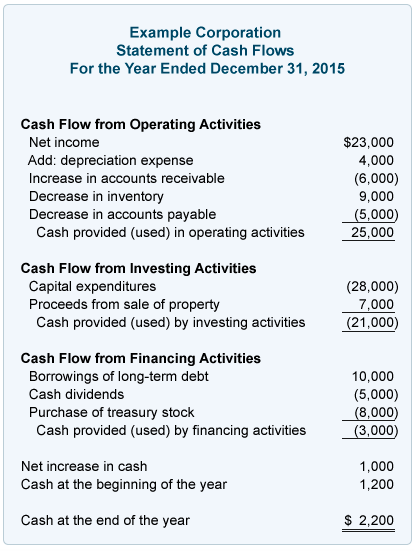
(Source: accountingcoach.com)
Cash flow analysis statements are generally separated into three parts:
- Operating activities: This section evaluates net income and losses of a business by assessing sales and business expenses, as well as other inflows and outflows of cash transactions to determine a net figure.
- Investment activities: This section reports inflows and outflows from purchases and sales of long-term business investments such as property, assets, equipment, and securities. For example – if your bakery business purchases an additional piece of kitchen equipment, this would be considered an investment and accounted for as an outflow of cash. If your business then sold equipment that was no longer needed, this would be considered an inflow of cash.
- Financing activities: This section accounts for the cash flow trend of all money that is related to financing your business. For example: if you received a loan for your small business, the loan itself would be considered an inflow of cash. Loan payments would be considered an outflow of cash, and both would be recorded in this part of the cash flow analysis statement.
2) Market Research
Unfortunately, small business owners overlook the importance of market analysis. It is essential for a business to situate itself in a good industry or a market niche with growth and healthy profit opportunities. In a low growth market, even a company with the best talents will fail. In building a market analysis evaluate and gather your industry description and outlook, information about your target market, distinguishing characteristics of your potential customers, the size of the primary target market, and a competitive analysis.
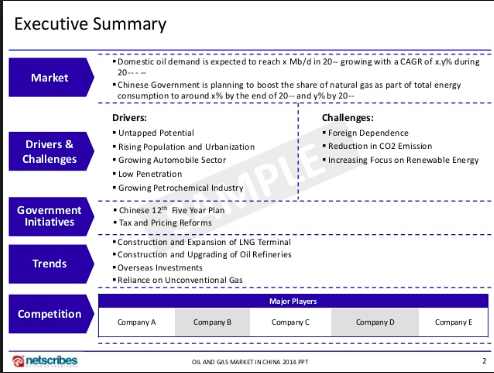
(Sample of a market research report on oil demand in China)
Here are four sources of free data for market analysis research:
- U.S. Census Bureau, American Fact Finder; http://factfinder.census.gov/faces/nav/jsf/pages/index.xhtml
- The U.S. Census Bureau’s Business Help Site and their Data Access tools; https://bhs.econ.census.gov/bhs/
- Business Data and Statistics from SBA Office of Advocacy https://www.sba.gov/advocacy
- Bureau of Economic Analysis http://bea.gov
3) Marketing Activity
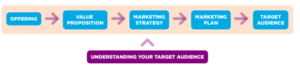
The key to a strong marketing approach is the ability to see your product/ service in the lens of a customer. Research on the distinguishing characteristics of your customers and your competitor’s practices should grant you insights into how best to communicate your product/service’s value. Customers are diverse and receive information differently regardless of how niche your business is.
In addition, marketing activity should correspond to the diversity of your customers. Marketing towards long-term customers should be different from approaches to growth your customer base. For example, loyalty programs or the ability to shop first for a new line or service communicate to repeat customers their value and the company’s appreciation for their service. Marketing activities designed to increase customers should focus on their creatively and originally to communicate their product/service’s value in a saturated and competitive market.
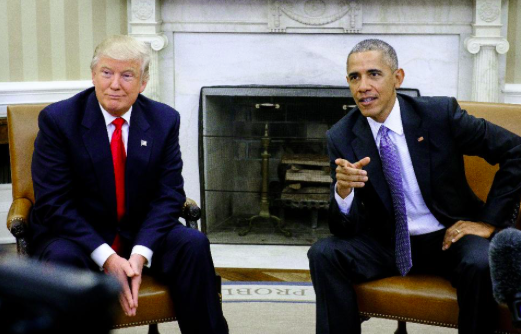
(Photographer: Pete Marovich/Bloomberg)
Creating a solid business foundation built upon the above business fundamentals of finance and accounting, market activity, and market research will help small businesses recover and adjust to uncertain economic effects once the Trump administration assumes control on January 20, 2017.
The post How Should Small Businesses Respond to a Trump Presidency? appeared first on WPFSI.
]]>